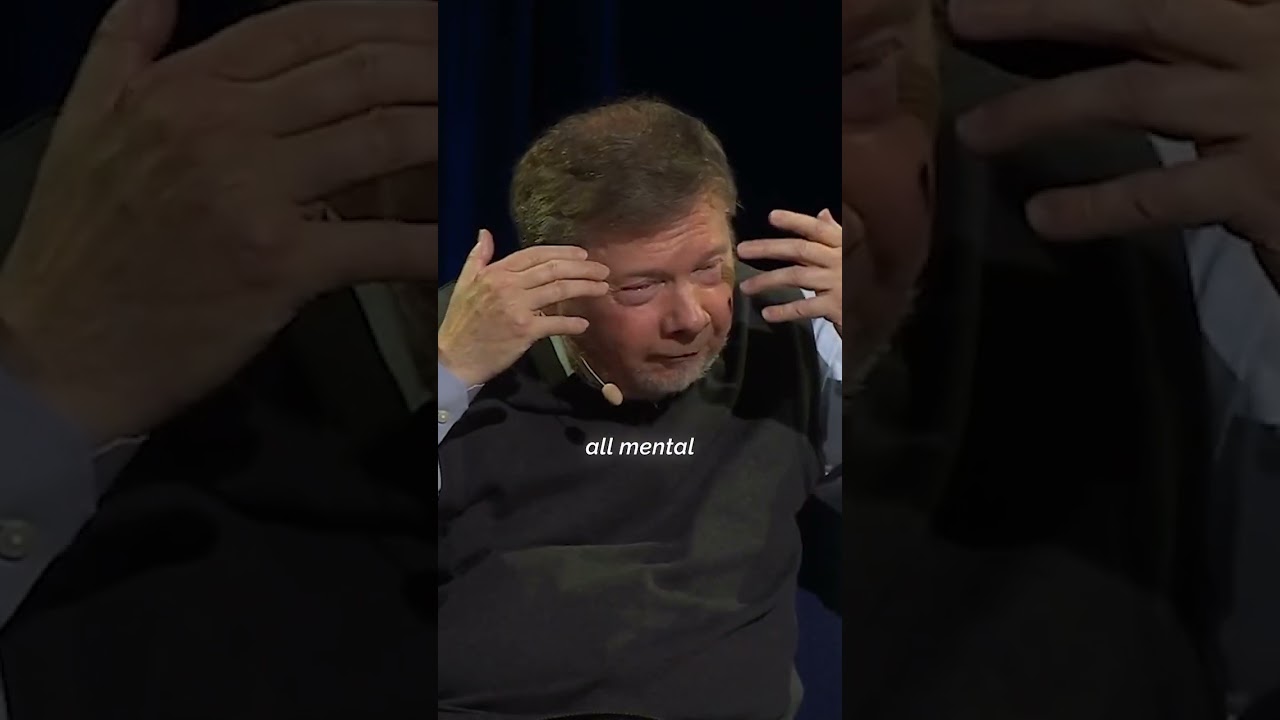
TLDR: Eckhart Tolle frames spiritual awakening as a process that requires stepping outside the familiar patterns and safety of the ego's comfort zone. Rather than seeking spiritual experiences that reinforce existing identity, genuine transformation emerges when we willingly encounter what feels unsafe, unknown, or resistant to the conditioned mind. This talk examines how discomfort and the willingness to be uncomfortable become the gateway to authentic spiritual development.
Why Does Spiritual Growth Require Leaving Comfort Behind?
The conditioned mind—the collection of habitual thoughts, beliefs, and reactive patterns we've accumulated—naturally seeks safety, predictability, and confirmation of what it already knows. The ego has invested tremendous energy in maintaining these patterns because they feel familiar and, in a distorted way, protective. Tolle suggests that true spiritual awakening cannot occur within this closed system. When we remain entirely within our comfort zone, we are essentially reinforcing the same consciousness that created our suffering in the first place.
The comfort zone is where the small self (the ego) holds court. It is lined with psychological defense mechanisms, familiar narratives about who we are, and well-worn neural pathways. Spiritual growth, by contrast, requires us to encounter dimensions of ourselves and reality that the thinking mind has not yet colonized or controlled. The moment we feel genuine discomfort—the sense that something we're doing challenges our identity or our sense of safety—we're often at the threshold of real transformation.
What Happens When We Step Into the Unknown?
Stepping outside the comfort zone creates a gap between the mind's expectations and what is actually occurring. In that gap lies presence—the immediate, unfiltered experience of being alive without the mediation of thought. When we are no longer occupied with defending our known identity or seeking confirmation within predictable patterns, consciousness becomes available. This availability is where awakening becomes possible.
Tolle distinguishes between spiritual seeking that remains within the ego (pursuing experiences, collecting practices, building a "spiritual identity") and genuine spiritual transformation, which dissolves the illusion of a separate, isolated self. The discomfort of stepping into the unknown serves as a dissolution of this illusion. When the mind cannot find solid ground in its usual references, it begins to relax its grip, and deeper awareness can emerge.
How Does Discomfort Function as a Teacher?
Discomfort signals that we are being pressed against the edges of our conditioned patterns. Rather than interpreting this as a sign that something has gone wrong, Tolle invites us to recognize it as an opportunity. The resistance we feel—the emotional charge, the impulse to retreat back to what feels safe—contains information. It shows us where our conditioning has created walls, where we've contracted around certain beliefs, where the ego is still defending its territory.
This reframing transforms discomfort from something to be avoided into something to be approached with curiosity and presence. When we can stay present with discomfort instead of immediately reacting to it or fleeing it, we create space for a new response. We contact a part of ourselves that is not identified with the need for comfort and safety—a deeper, unconditioned awareness that is already whole and awake.
What Is the Difference Between Spiritual Experiences and Genuine Transformation?
Many spiritual seekers pursue peak experiences—moments of bliss, insight, or expanded consciousness that feel transcendent. While such experiences can be real, Tolle cautions against mistaking them for the goal of spiritual practice. An experience, by definition, is something the ego can integrate, remember, and use to reinforce a spiritual identity ("I had an awakening experience; I am now more evolved"). Genuine transformation, by contrast, is not primarily about experiences at all—it is about a fundamental shift in how consciousness relates to itself.
When we leave the comfort zone in pursuit of spiritual experiences, we're still operating within the framework of seeking. The seeker and the sought remain two separate things. True awakening, in Tolle's view, dissolves the structure of seeking itself. It is not the ego acquiring something new but the ego gradually recognizing its own illusory nature. This cannot happen while we remain cocooned in the comfort of our familiar identity.
How Do We Practice Living Beyond Our Comfort Zones?
The willingness to be uncomfortable is itself the practice. This does not mean recklessly pursuing trauma or unnecessary suffering. Rather, it means noticing where we contract, where we habitually retreat, where we say "no" to life because it doesn't match our expectations or threatens our self-image. Then, consciously and with awareness, we say "yes" anyway. We let ourselves feel the fear, the disorientation, the loss of control that accompanies stepping into unknown territory.
One way to engage this practice is to observe our automatic resistances throughout the day. When something makes us uncomfortable—an awkward conversation, a situation where we can't control outcomes, an experience that contradicts our self-image—we can pause and practice presence rather than reactivity. We can breathe, notice the sensations in the body, become aware of the story the mind is telling, and remain open to what is actually happening beneath the story.
Tolle also points toward a broader reorientation of how we relate to difficulty. Instead of seeing obstacles, setbacks, or challenging emotions as interruptions to spiritual progress, we can recognize them as the primary texture of the spiritual path itself. They are not obstacles to awakening; they are awakening, if we meet them with consciousness rather than mechanical reaction.
What Role Does the Body Play in Stepping Beyond Comfort?
The ego primarily operates through thought, but the body holds much of our conditioning in the form of tension, armor, and habitual contraction. When we step outside the comfort zone, the body often signals discomfort before the mind fully registers what is happening. Anxiety may arise, the chest may tighten, the stomach may churn. Rather than interpreting these signals as warnings to retreat, Tolle encourages direct awareness of these sensations. To feel the discomfort fully—without the story, without trying to fix it—is to begin to release the grip it has on our nervous system.
As we repeatedly practice remaining present with bodily discomfort instead of contracting against it, the body learns that it is safe to relax. The nervous system begins to recognize that discomfort is not danger. This reprogramming of the body-mind connection is crucial to genuine spiritual transformation because it removes the physiological brakes that keep us trapped in the comfort zone.
Where to Go From Here
Eckhart Tolle's invitation to embrace spiritual growth through stepping beyond comfort is not a prescription for asceticism or self-harm. Rather, it is an invitation to examine where the fear of the unknown keeps us imprisoned in a small, known version of ourselves. The next time you encounter discomfort—whether emotional, relational, or circumstantial—pause and ask: What would happen if I stayed present with this rather than contracting against it? What if the discomfort itself is the doorway to the freedom I've been seeking?
True spiritual growth emerges not from accumulating new experiences or practices but from a fundamental willingness to let go of the security we've mistaken for wholeness. The comfort zone is ultimately a cage—one we've built from the materials of our conditioning. The awakening to our true nature awaits on the other side of that willingness to step into the unknown.